5 Hidden Ingredients in Your Dog’s Food That Are Actually Junk
We all want the best for our dogs. We buy the bags with photos of fresh steak and whole vegetables on the front. We trust the words “Premium” and “Natural.”
But if you flip that bag over and look at the fine print, the story often changes.
Pet food regulations allow manufacturers to use clever legal definitions to disguise industrial waste and cheap fillers as “nutrition.” If your dog suffers from chronic itching, low energy, or digestive issues, the culprit is often hiding in plain sight on the ingredient label.
Here are the top 5 ingredients you need to stop feeding your dog immediately—and what to look for instead.
1. “Meat and Bone Meal” (The Mystery Meat)
If you see “Chicken Meal” or “Beef Meal,” that is generally acceptable—it means the water has been removed from the meat.
However, if you see the generic term “Meat and Bone Meal” or just “Meat Meal,” put the bag back on the shelf.
Why it’s dangerous:
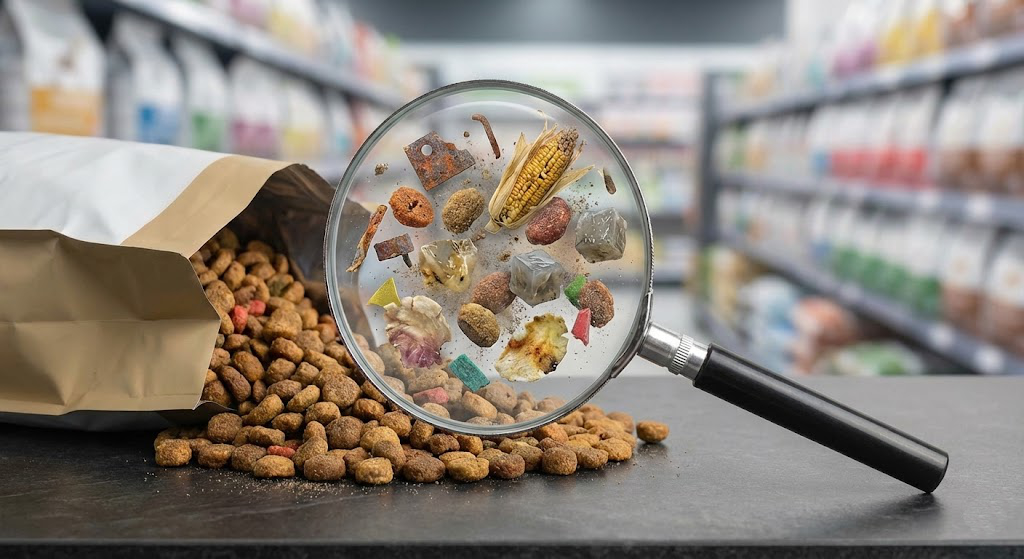
According to AAFCO definitions, generic meat meal is a rendered product from mammal tissues that doesn’t need to specify the animal source. This is the “garbage disposal” of the pet food industry. It can legally contain:
- Roadkill.
- Euthanized animals from shelters or vet clinics.
- Diseased livestock rejected for human consumption.
- Expired supermarket meat (sometimes including the Styrofoam packaging).
The Fix: Always look for a named protein source as the first ingredient (e.g., “Deboned Turkey,” “Salmon,” “Beef Heart”).
2. BHA and BHT (Chemical Preservatives)
Dry kibble needs to sit on a shelf for 12 to 24 months without going rancid. To achieve this, manufacturers spray fats with preservatives.
Butylated Hydroxyanisole (BHA) and Butylated Hydroxytoluene (BHT) are synthetic antioxidants used to preserve fats.
The Health Risk:
While FDA-approved in small amounts, these chemicals are banned in human food in many parts of Europe. Studies have linked BHA and BHT to:
- Carcinogenic (cancer-causing) properties in lab animals.
- Kidney and liver damage over long-term exposure.
- Hyperactivity and behavioral issues.
The Fix: Look for foods preserved naturally with “Mixed Tocopherols” (Vitamin E) or Rosemary Extract. These keep food fresh without the chemical toxicity.
3. Corn Gluten Meal & Wheat Gluten
You will often find “Corn Gluten Meal” listed in the top 5 ingredients of budget (and even some “science”) diets.
Why? It’s not because dogs love corn. It’s because corn gluten is a cheap industrial by-product that raises the protein percentage on the label.
The Biological Problem:
Dogs are facultative carnivores. While they can eat plants, their digestive tracts are short and acidic, designed to break down animal protein.
- ioavailability: Plant-based protein is harder for dogs to absorb than meat protein.
- The “Sugar” Spike: Corn is a high-glycemic carbohydrate. It spikes your dog’s blood sugar, leading to insulin resistance, obesity, and diabetes over time.
The Fix: Look for “Grain-Free” options or foods that use whole, low-glycemic grains like Oats or Brown Rice instead of fractionated corn gluten.
4. Food Dyes (Blue 2, Red 40, Yellow 5)
This is the most infuriating ingredient on the list because it serves literally zero purpose for the dog.
Dogs are partially color-blind. They do not care if their kibble is red, green, or brown. Those colors are added solely to manipulate you, the human buyer, into thinking the food contains “vegetables” or “meat.”
The Side Effects:
- Red 40: Linked to immune system tumors in mice and allergic reactions in dogs.
- Yellow 5: Linked to hyperactivity and behavioral changes.
If your dog’s food looks like a bowl of cereal, it’s probably just as sugary and processed. Real meat turns brown when cooked. Brown is good.
5. “By-Product” Meals
“Chicken By-Product Meal” is very different from “Chicken.”
While organ meats (liver, kidney, heart) are incredibly nutritious for dogs, “By-Products” refer to the parts of the animal that are left over after the human meat is removed. This can include:
- Feet and beaks.
- Undeveloped eggs.
- Intestines (cleaned of manure).
While not necessarily “toxic,” it is a low-quality protein source compared to muscle meat. You are paying premium prices for the slaughterhouse leftovers.
Is Your Dog’s Food Safe?
You don’t need a degree in animal nutrition to know if you’re being scammed. We built a free tool to help you cut through the marketing fluff.
Paste Your Ingredients Here for an Instant Grade
Our AI checks for these 5 red flags (and 20 others) to give you an instant A to F score. Don’t guess with your best friend’s health.
Here are some of our other articles that might interest you:

Best Dog Food for French Bulldogs: Fixing the Gas and the Itch

Best Dog Food for Labrador Retrievers: Managing Weight & Protecting Joints
Best Dog Food for Golden Retrievers: How to Feed for Longevity
Kibble vs. Fresh Food: Is the Price Tag Actually Worth It?
Why Is My Dog Constantly Itching? (Hint: It Might Be the Chicken)