Best Dog Food for Labrador Retrievers: Managing Weight & Protecting Joints
If you own a Labrador, you know the drill: You feed them dinner, they inhale it in 30 seconds, and then look at you like they haven’t eaten in weeks.
Labs are famous for their “garbage gut”—the ability (and desire) to eat absolutely anything. While it can be funny, it creates a serious health crisis.
Obesity is the #1 health threat to Labrador Retrievers.
Extra weight doesn’t just look bad; it destroys their joints. Labs are already genetically prone to Hip and Elbow Dysplasia, and every extra pound of fat puts four pounds of pressure on their knees and hips.
The problem isn’t usually that you are feeding them too much. It’s often that you are feeding them the wrong type of calories.
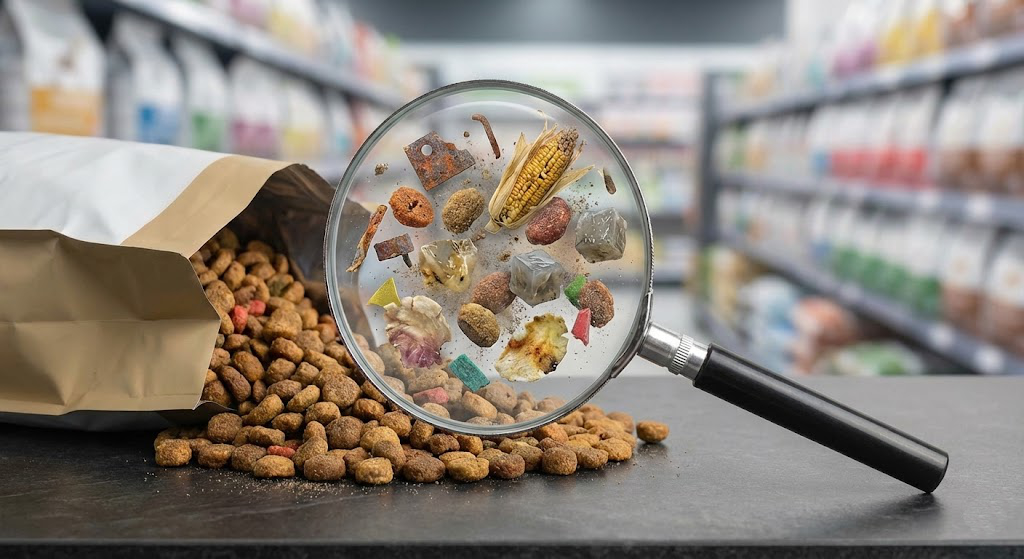
At KibbleGrader, we see thousands of food labels, and unfortunately, many “standard” kibbles are essentially calorie-dense sugar bombs that leave your Lab hungry and prone to weight gain.
Here is how to feed your Lab to keep them lean, full, and mobile.
The Labrador “Achilles Heel”: What To Avoid
Labs process food differently than other breeds. They have a gene variation (POMC) that literally prevents some of them from feeling full. When we grade food for a Lab, we are looking for these specific “Red Flags”:
1. The “Empty Calorie” Fillers (Corn & Soy)
Cheap kibble uses corn and soy to boost protein numbers. These are high-glycemic carbohydrates that spike insulin levels, signaling your dog’s body to store fat. It is comparable to feeding your dog pasta for every meal.
The Fix: You need a high-protein, moderate-fat diet that prioritizes satiety (feeling full) over bulk.
2. “Glucosamine” Marketing Gimmicks
Many bags claim to support “Joint Health.” The reality is that the amount of Glucosamine in standard kibble is often negligible. You would likely have to feed your Lab 20 cups a day just to get a therapeutic dose.
The Fix: Don’t rely on kibble for joint support. You need a dedicated source of Glucosamine and Chondroitin, such as Green Lipped Mussel.
3. Low Moisture Content
Dry kibble contains less than 10% water. Moisture adds volume without calories. When you feed dry pellets, your Lab eats a calorie-dense meal that takes up very little space in their stomach, leaving them begging for more.
Top 3 Diet Options for Labrador Retrievers (Ranked)
Our data shows that the best diet for a Lab focuses on Volume Eating—allowing them to eat a satisfying amount of food without blowing their calorie limit.
1. The “Lean & Mean”: Fresh Food (Best for Weight Loss)
Brands: The Farmer’s Dog, Nom Nom
Fresh food is roughly 70% moisture. This means your Lab gets a huge bowl of food (high volume) that is less calorie-dense than a small cup of dry kibble. It keeps them fuller for longer and naturally manages weight without you having to “starve” them.
2. The “Green Bean” Hack (Best Value)
Brands: High-Protein Kibble (e.g., Orijen Fit & Trim) + Canned Green Beans
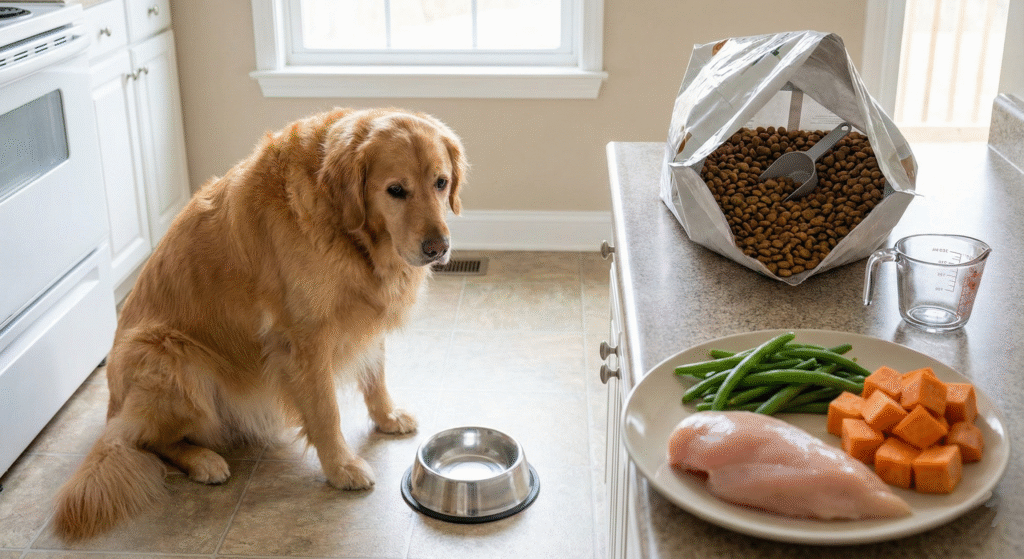
A smart strategy is to take 20% of their kibble away and replace it with low-sodium canned green beans or pure pumpkin puree. This adds massive fiber and bulk to the bowl for almost zero calories. It is the single best budget hack for a hungry Lab.
3. The “Joint Support” Kibble (Convenience)
Brands: Hill’s Science Diet Perfect Weight, Royal Canin Labrador Formula
While we usually dislike big commercial brands, their specific “Large Breed Weight Management” formulas are scientifically formulated with two key benefits:
- L-Carnitine: An amino acid that helps burn fat.
- Fiber Blends: Specific ingredients designed to curb hunger.
This is a good option for convenience, but always check the ingredient list to ensure meat is still the first ingredient.
FAQs: “Why is my Lab always hungry?”
Q: Can I free-feed my Labrador? A: Absolutely not. A Labrador will eat until they are sick. You must measure every meal. We recommend using a “Slow Feeder” bowl to prevent them from inhaling food, which reduces the risk of Bloat (Gastric Dilatation-Volvulus), a life-threatening emergency.
Q: How do I protect their joints? A: Diet is step one (keep them thin). Step two is supplementation. We recommend adding a Green Lipped Mussel supplement or a dedicated joint topper to their food starting as early as age 1.
Q: Is “Senior” food necessary? A: For Labs, yes. As they slow down, their metabolism crashes. Senior formulas usually have fewer calories and higher joint support. If your Lab is over 7, it’s time to switch.
The Final Verdict: Love Them by Saying “No”
The hardest part of owning a Lab is those puppy dog eyes begging for a treat. But remember: Food is not love. Health is love.
Keeping your Labrador lean is the single most effective way to extend their life and delay arthritis. If you are looking at your current bag and see “Corn Meal” as a top ingredient, you are fighting a losing battle against their weight.
Is your dog food making your Lab fat? Use our Free Kibble Grader Tool and find out in seconds.
Here are some of our other articles that might interest you:
Best Dog Food for French Bulldogs: Fixing the Gas and the Itch

Best Dog Food for Labrador Retrievers: Managing Weight & Protecting Joints
Best Dog Food for Golden Retrievers: How to Feed for Longevity
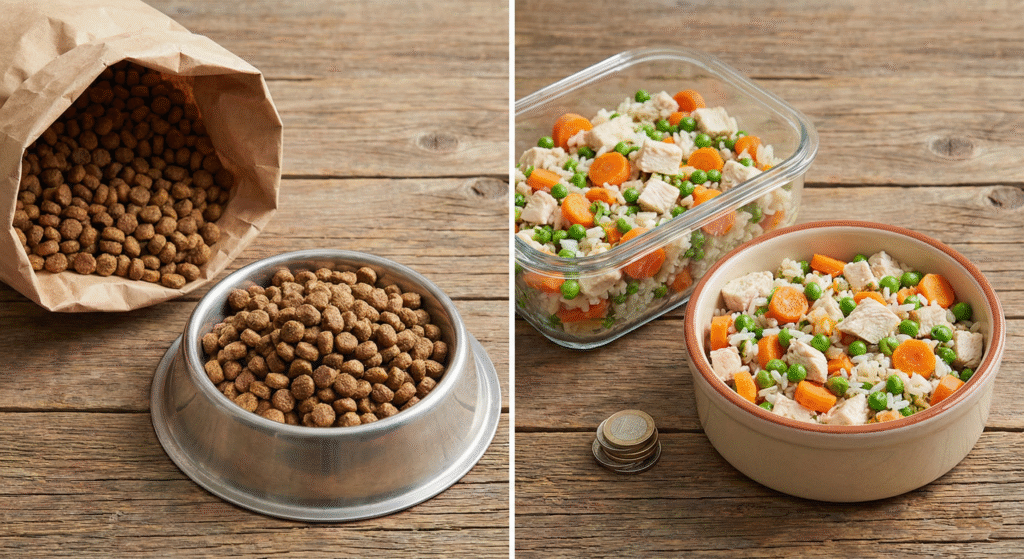
Kibble vs. Fresh Food: Is the Price Tag Actually Worth It?
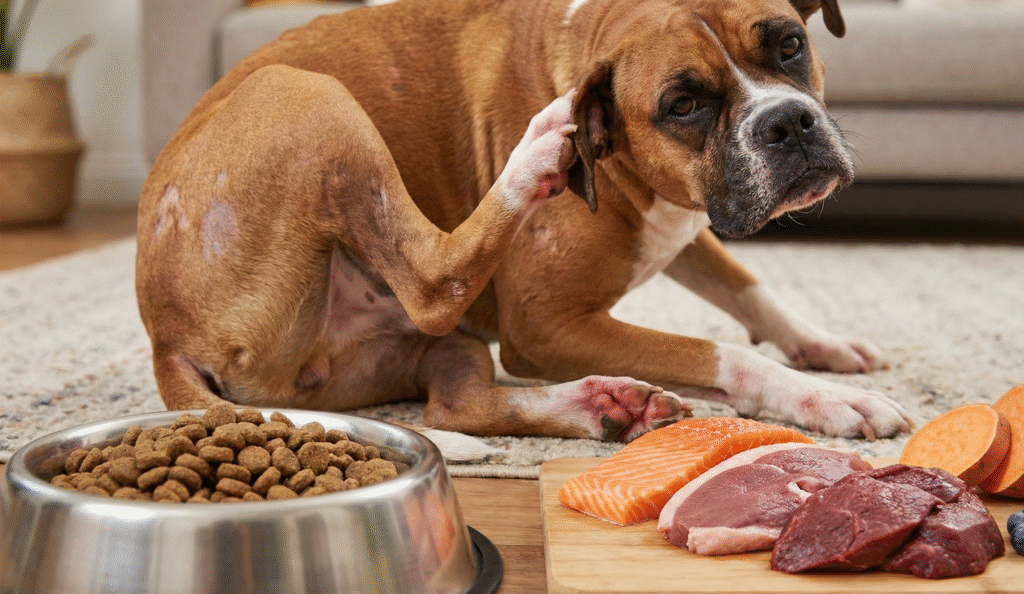
Why Is My Dog Constantly Itching? (Hint: It Might Be the Chicken)